
Article
Sales Pipeline Management Best Practices for Higher Conversions
July 11, 2026 . 3 min read
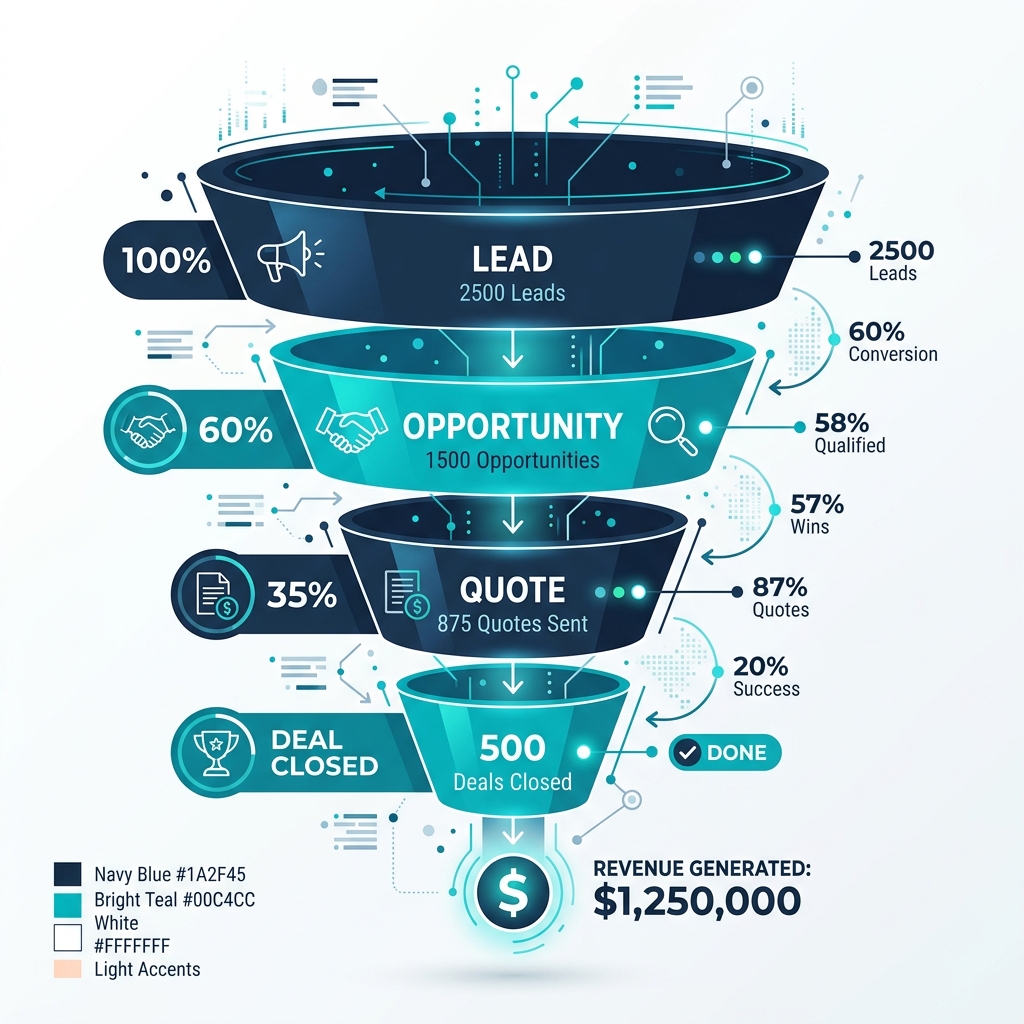
The Anatomy of a High-Performing Sales Pipeline
A sales pipeline represents the stages a prospect goes through before becoming a customer. Effective pipeline management involves defining clear progression rules, tracking conversion rates between stages, and identifying bottleneck areas early on.
Applying Visual Best Practices to Your Pipeline
Implementing a visual pipeline board (like a Kanban view) improves team transparency and focus. In Planex365 CRM's interactive pipeline, sales managers can view deal velocity, assign weighted win probabilities, and quickly diagnose why specific opportunities are stalled.
Frequently Asked Questions (FAQ)
Q1: What is the difference between a sales funnel and a sales pipeline?
A: A sales pipeline outlines the actions a salesperson takes to move a deal to completion, while a sales funnel represents the conversion rates and journey of prospects from first awareness to purchase.
Q2: How do you calculate sales pipeline velocity?
A: Pipeline velocity is calculated by multiplying the number of opportunities by the average deal size and the win rate percentage, then dividing by the length of the average sales cycle.
Frequently Asked Questions
What are the most common web development mistakes that hurt ROI?
The five most damaging mistakes are neglecting user experience, ignoring mobile optimization, slow page load times, overlooking basic SEO, and not tracking performance data. Each one quietly drives away visitors, lowers conversions, or weakens search rankings, so fixing them usually delivers a measurable lift in return on investment.
How does website loading speed affect conversions?
Slow sites lose visitors before content even renders. When a page takes too long, many users abandon it, raising bounce rates and reducing sales. Speed also influences SEO rankings. Optimizing images, streamlining code, and choosing reliable hosting all help pages load faster, which improves user retention and conversion rates.
Why is mobile optimization important for a website?
Mobile browsing now exceeds desktop usage, so a site that is not mobile-friendly alienates a large share of its audience and loses traffic and sales. Responsive design makes a site usable across all screen sizes. It also improves user satisfaction and benefits SEO, since search engines favour mobile-friendly pages.
What basic SEO practices are often overlooked in web development?
Teams frequently skip optimizing metadata, using appropriate heading tags, and ensuring keyword relevance. Missing these basics leads to poor search rankings and weak organic traffic. Reviewing and updating your SEO regularly, including titles, descriptions, and structured content, helps a site stay visible and competitive in search results over time.
Why should I track website performance data?
Without analytics it is hard to understand user behaviour, conversion rates, and what is or is not working. Tools like Google Analytics let you monitor key metrics and spot areas for improvement. Acting on that data lets you make informed decisions that strengthen your web development efforts and improve overall ROI.