
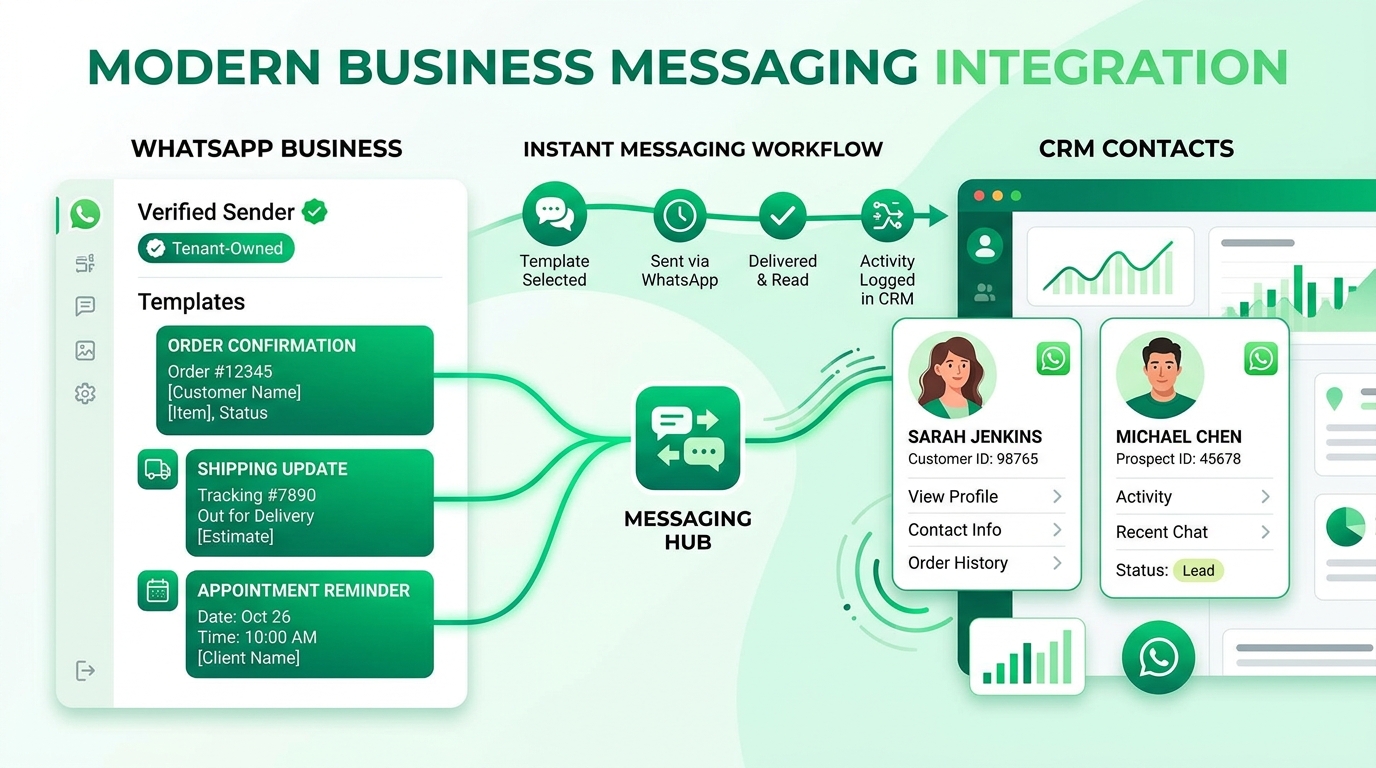
WhatsApp is now a daily sales channel for many Indian businesses. But unmanaged WhatsApp communication creates risk: messages are scattered across phones, consent is unclear, and managers cannot see what was sent. A CRM-integrated WhatsApp flow solves this without forcing teams to leave their customer record.
Tenant-owned number first
In Planex365 CRM, the sender is the tenant organization's WhatsApp Business number. This protects brand trust and avoids the confusion of a shared Planex365 sender. The customer sees the business they know.
Templates for messages outside the 24-hour window
When the customer service window is closed, approved WhatsApp templates are required. Planex365 helps teams copy approved template blueprints, manage provider status, fill parameters from CRM data and review the message before sending.
Consent and history
Sales teams need speed, but not at the cost of compliance. The CRM keeps consent state visible, records opt-in or opt-out, and stores conversation history against the lead or opportunity.
Where this adds value
- Quotation follow-up messages with customer and quote context.
- Document collection reminders for pending sales requirements.
- Decision confirmation messages after proposal discussions.
- Payment reminders for receivables workflows.
Better than manual WhatsApp
Manual WhatsApp is fast, but it is not auditable. CRM WhatsApp keeps speed while adding ownership, visibility, approved templates, consent and usage control.